Standards for High-Stakes Documentary Production
How to cover controversial content without getting canceled, or worse.

This week is going to be all about documentaries but not just any topic we're going to be talking about how to cover controversial and in your face topics that make for good quick content but rarely get the full story told. We're going to discuss how to cover events as a filmmaker with journalistic integrity.
Yes that still exist, and it's up to each of us in this industry to not go for the quick thumbs up meme generating content that is a flash in the pan and nobody remembers who originally posted it.
Besides it is such an injustice done to the actual material when you just get a Sound bike from it and no one really learns anything. So I challenge you this week we're going to create a small short documentary About something that makes you a little uncomfortable. This can be anything from homeless teens, brain rot, religious cultures outside of your comfort zone, political rallies and protest, ICE And immigration, sex trafficking, drug abuse, hard-core racist, alternative sexual lifestyles, if it makes you feel like it's something you probably wouldn't talk about over the dinner table, guess what this week your challenge is to explore it.
There's a certain way we need to go about this however you can't just show up somewhere and say hey I have an iPhone I'm gonna record you, you might get arrested or your lights knocked out. So let's go over some do’s and don'ts and keep in mind that not everything is going to fit every situation so I will have several articles today to get you started this is just one of them. And if you need follow ups like where to get photo release forms or anything like that just leave it in the comments and I will help you out no problem. The important thing is that you start today.
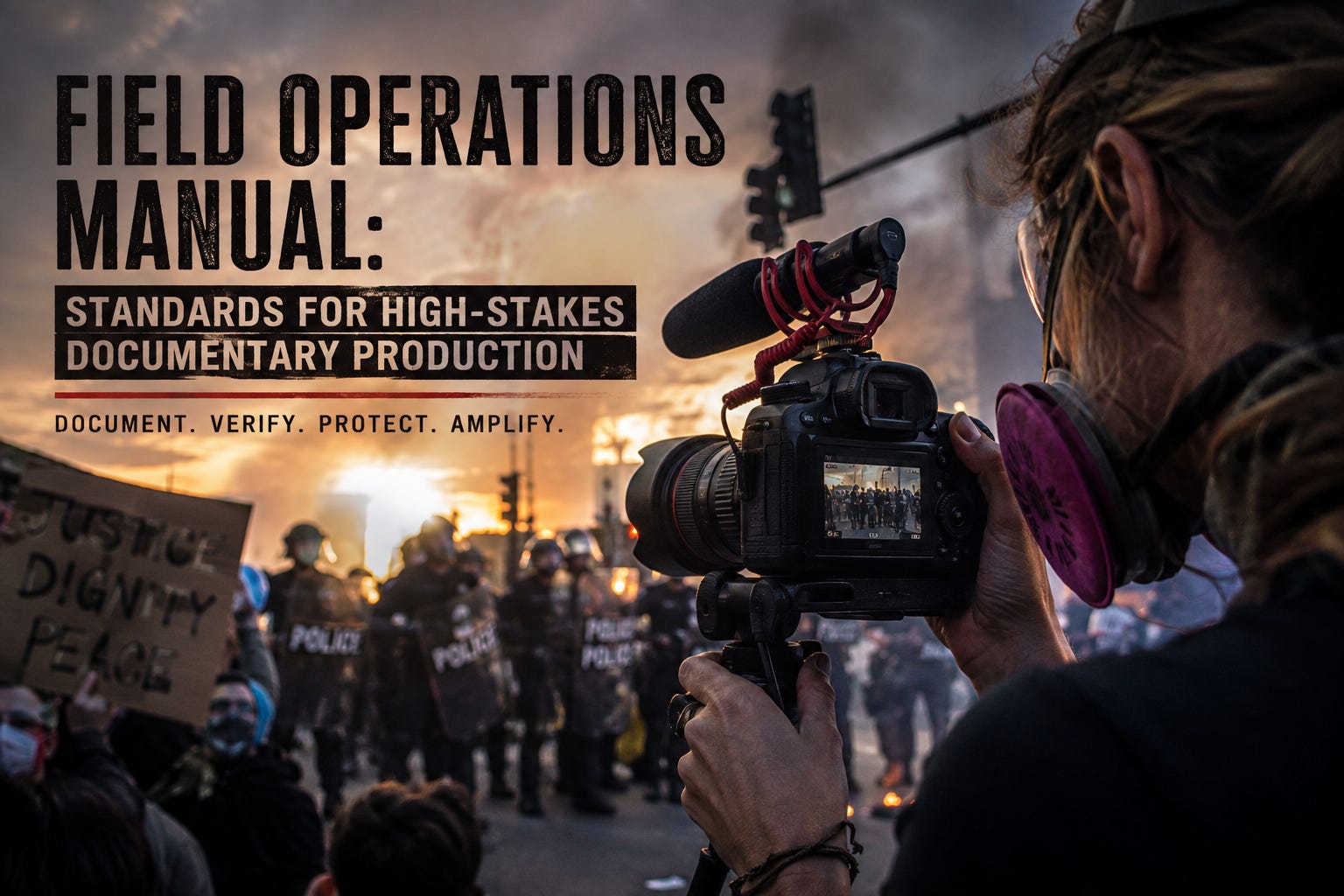
Mission and Ethical Foundations
The purpose of this manual is to bridge world-class documentary filmmaking with the rigorous standards required for human rights documentation. In high-stakes environments, footage must do more than tell a compelling story. It must also serve as a verifiable record that can withstand legal scrutiny.
By combining professional filmmaking techniques with established documentation protocols, field teams can create work that has both maximum public impact and lasting evidentiary value.
Core Principles of Conduct
Every field team is expected to follow these principles throughout every stage of production.
Accountability and Positionality
Directors should clearly understand and communicate why they are telling this story and why they are the appropriate person to tell it. This includes recognizing personal biases and defining the intended impact of the project.
Community Care and Safety
The safety and well-being of crew members, participants, and the surrounding community must always take priority. Every production decision should consider both physical and emotional safety. (Duh)
Informed Consent
Consent is an ongoing conversation, not a single signature. Participants should understand how their footage may be shared publicly and the risks that may accompany publication, particularly when documenting vulnerable individuals.
Mitigation of Harm
Filmmakers should anticipate potential negative consequences of their work and actively minimize harm to everyone involved throughout the production process.
Building Strong Documentation
High-quality documentation combines excellent cinematography with reliable evidence.
Professional footage should include:
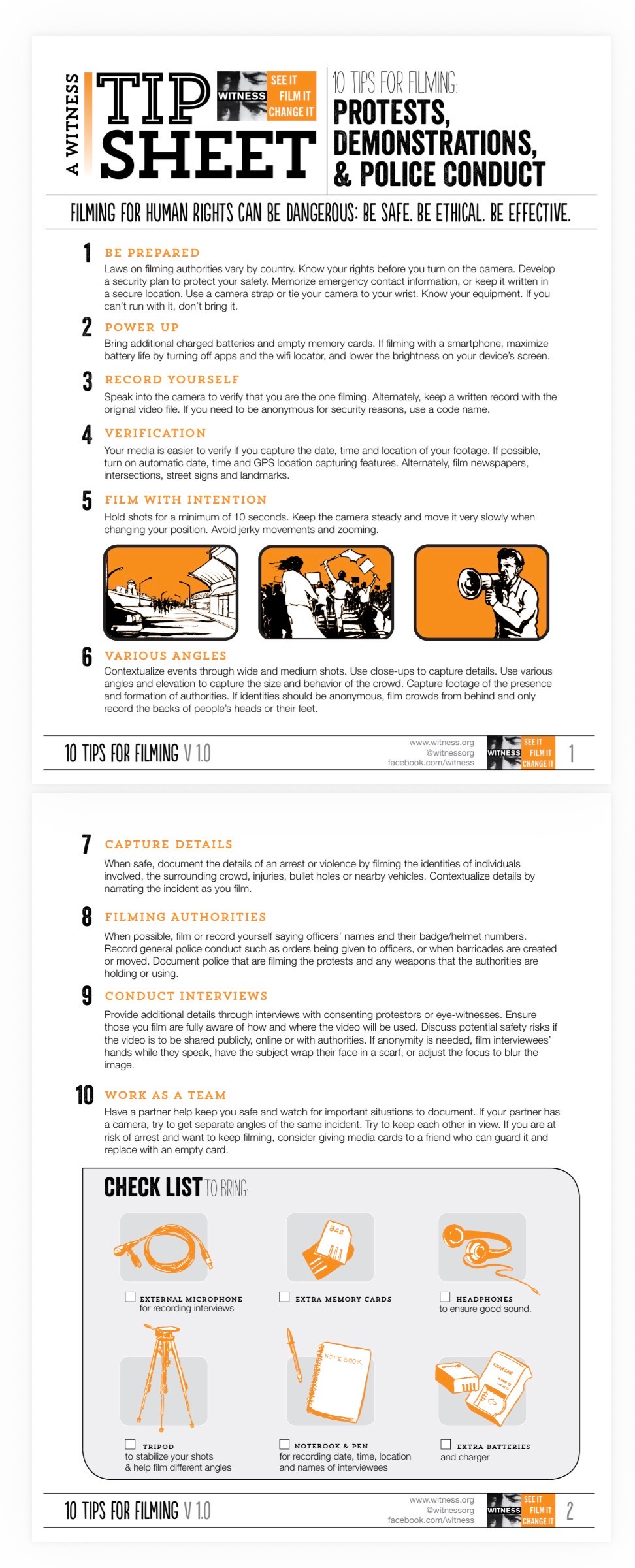
Stable camera work
Shots held for at least ten seconds
Clean, monitored audio
Multiple camera angles whenever possible
To strengthen evidentiary value, crews should also capture:
GPS location data
Accurate timestamps
Street signs and recognizable landmarks
Newspapers or news broadcasts that establish the date
When cinematic storytelling and verified documentation work together, the resulting footage is both emotionally compelling and legally credible.
Pre-Deployment Security and Logistics
Preparation is one of the strongest forms of protection in the field. Thorough planning reduces unnecessary risk and allows crews to focus on documenting events instead of reacting to preventable problems.
Mobility Standards
A simple rule applies in every high-risk environment:
If you cannot run with it, do not bring it.
Seriously say this to yourself every time you start to pack your bag. And we're talking about water bottles extra batteries all of it it gets heavy and sometimes stuff goes down that you are not expecting and you've got to remember this phrase:
If you cannot run with it, do not bring it.
Every camera should be secured with a professional strap or wrist tether to prevent theft during chaotic situations.
Use a tripod or handheld stabilizer whenever possible to improve image quality. (A gimbal is kind of expensive a selfie stick not so much
. Start small if you need to, If you live in the United States there is definitely a 5below around you somewhere. They've got a lot of equipment that's pretty good quality For anywhere between $5 to $25
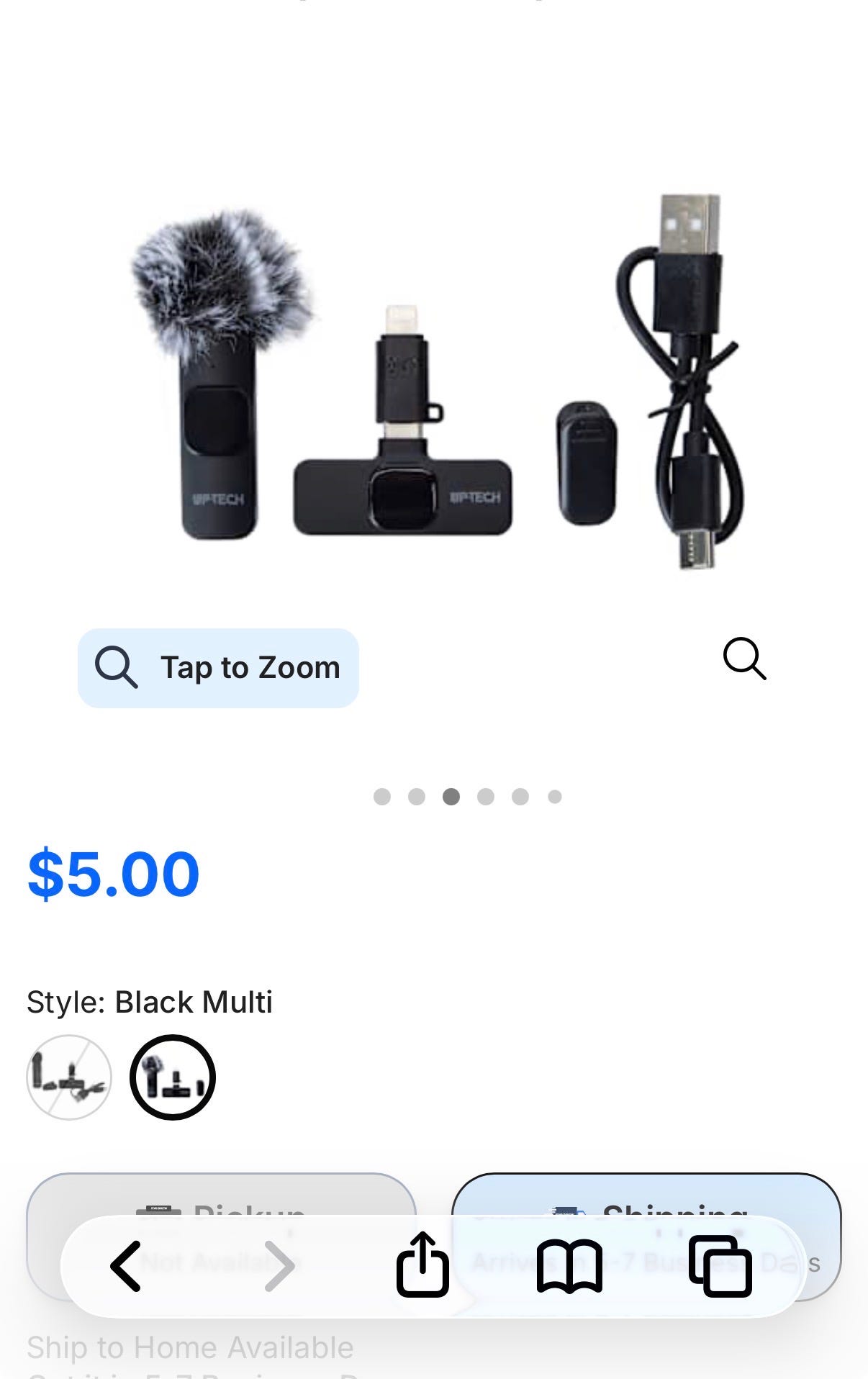
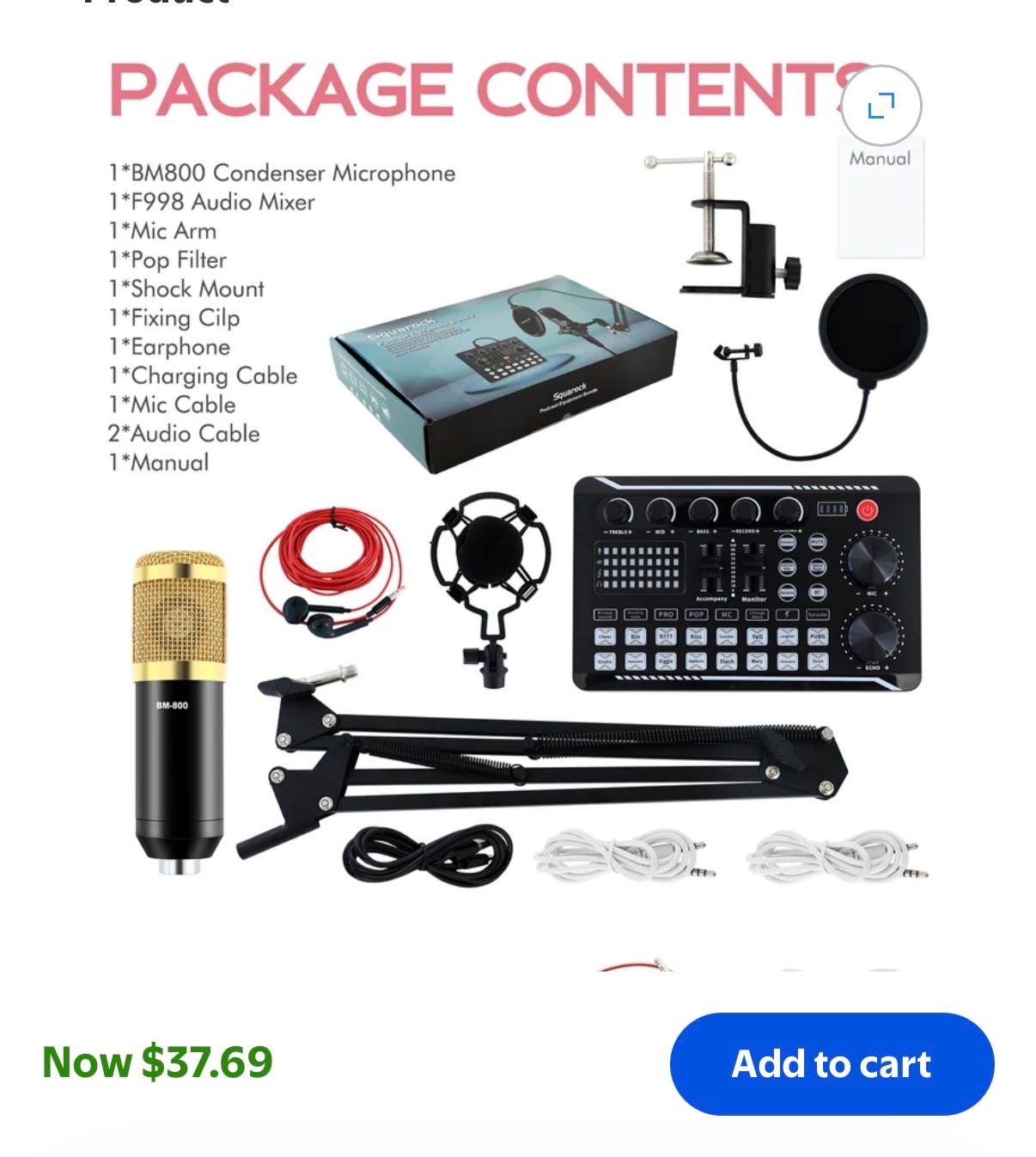

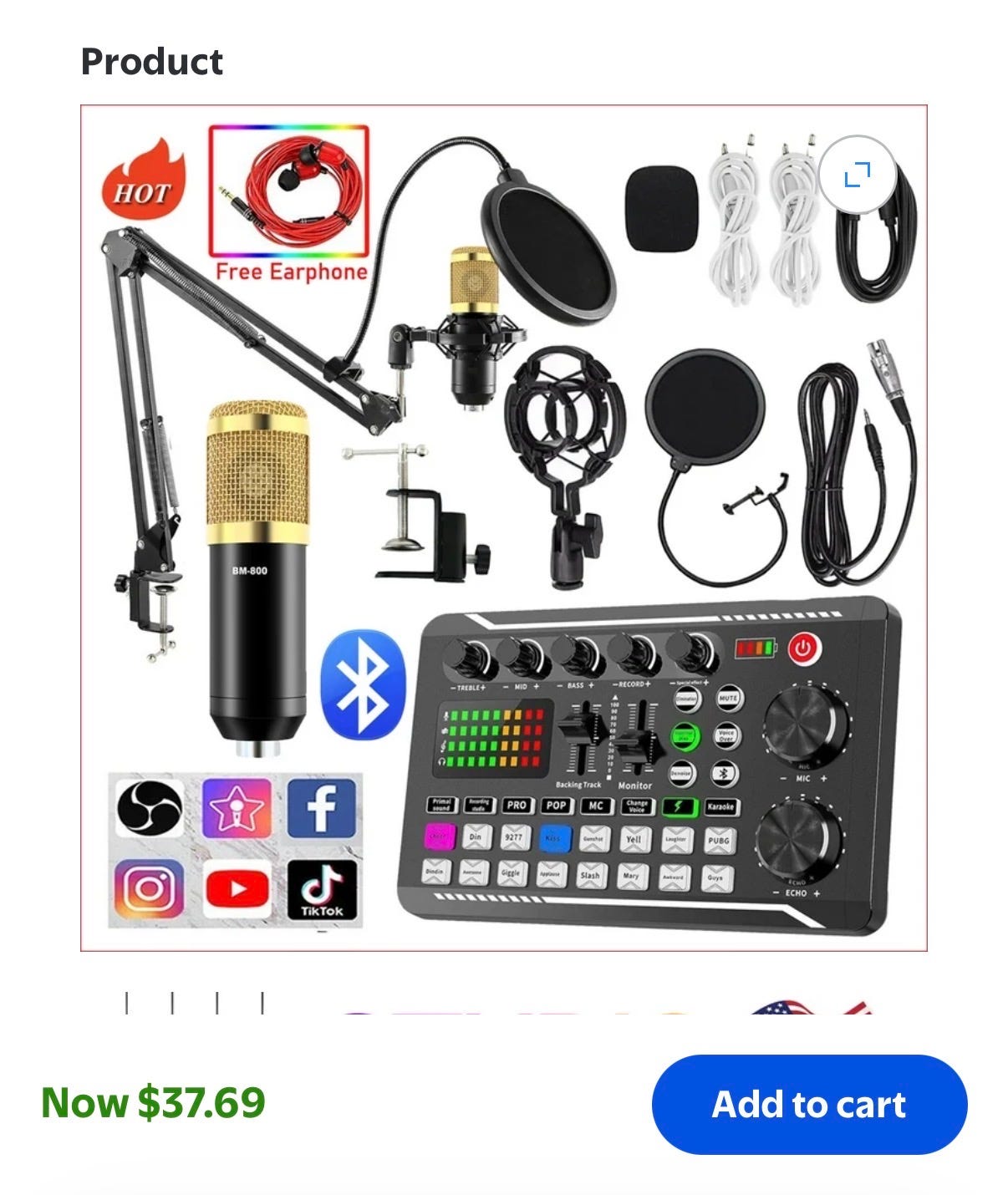
Every field kit should also include:
Headphones for monitoring audio
External microphones
A notebook for recording interview names, locations, and production notes
Power and Storage
To maintain continuous operation, crews should:
Carry at least two fully charged spare batteries.
Bring a portable power bank.
Reduce battery consumption by disabling unnecessary wireless connections, closing background applications, and lowering screen brightness.
To reduce the risk of losing footage if equipment is confiscated, use several smaller memory cards instead of a single large card. If confiscation or arrest appears likely, transfer completed memory cards to a trusted partner and replace them with empty cards whenever it is safe to do so.
Field Team Roles
Whenever possible, assign clear responsibilities within the crew.
A Safety Monitor maintains awareness of the surrounding environment and alerts the camera operator to approaching threats or police movement.
An Angle Differentiator records the same event from a different position, providing additional context and independent visual evidence.
An Emergency Contact Partner memorizes essential contact information and maintains visual contact with the operator to prevent isolation during chaotic situations.
Site Management and Public Notification
Professional transparency helps reduce misunderstandings and unnecessary conflict before filming even begins.
Notification Radius
When appropriate, deliver Letters of Notification to residents and businesses within approximately 200 feet of the filming location at least forty-eight hours before production begins.
Each notification should include a link to the project’s Code of Conduct so community members understand the purpose of the production and how concerns can be addressed.
Public Filming Notices
Place clearly visible filming notices at entrances and exits to areas where public filming will occur. These notices inform the public that recording is taking place and help establish transparency regarding the intended use of the footage.
Night Filming
Productions taking place between 10:00 p.m. and 7:00 a.m. require additional planning.
Obtain any required noise permits.
Whenever practical, speak directly with nearby property owners before filming begins.
Keep a written record of which addresses were contacted, whether someone was reached in person, or whether a written notice was left.
Cinematic Excellence and Verification
Technical excellence serves both creative storytelling and factual verification.
The Ten-Second Rule
To maximize editing flexibility and professional quality:
Hold every shot for at least ten seconds.
Avoid unnecessary zooms, rapid pans, or shaky movement.
When following action, move the camera slowly and deliberately.
Verifying What You Capture
Strong documentation requires more than compelling visuals.
Whenever possible:
Enable GPS location recording.
Enable automatic date and time stamps.
Film recognizable landmarks, street signs, and intersections.
Record a current newspaper or television news broadcast to establish the date.
Narrate your location, the time, and what you are witnessing as events unfold.
Choosing the Right Shots
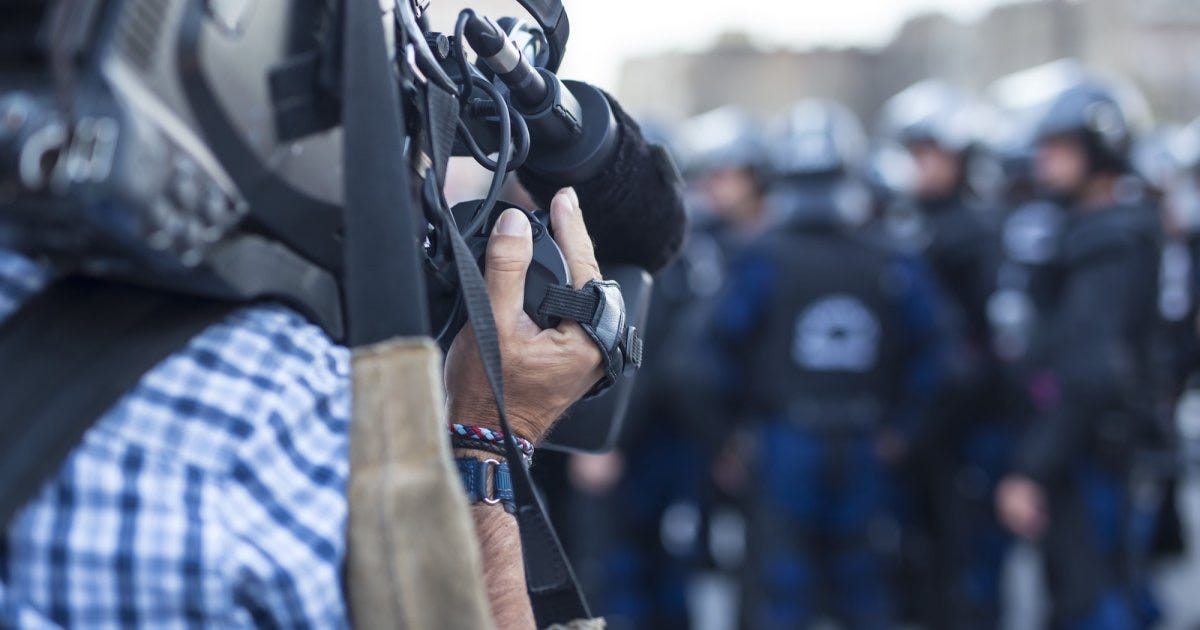
Wide and medium shots establish context by showing crowd behavior, police formations, and the overall environment.
Close-up shots document important details such as injuries, damage, shell casings, license plates, or other relevant physical evidence.
Elevated viewpoints or varied camera positions help accurately represent crowd size and the placement of barricades or other significant features.
Working with Authorities and Vulnerable Subjects
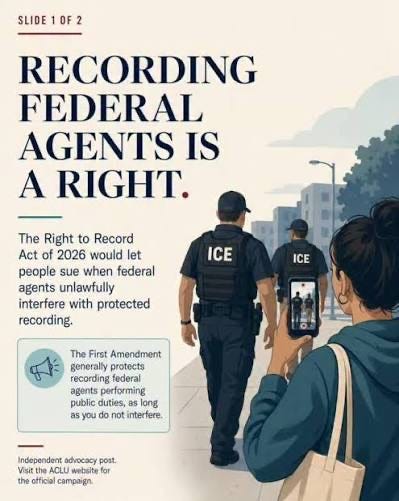
The objective is to document events accurately while minimizing risk to both the crew and the people being filmed.
Documenting Authorities
When recording police or security personnel, document:
Officer names
Badge numbers
Helmet identifiers
Commanding officers
Orders given to personnel
Officers recording or surveilling protesters or the film crew
The presence and use of weapons
The movement and placement of barricades
Consent and Identity Protection
Always explain the risks associated with public distribution before filming interviews.
If protecting someone’s identity is necessary for their safety, avoid recording recognizable facial features. Consider filming from behind or focusing on non-identifying details such as hands or feet.
Interview Techniques for High-Risk Subjects
When anonymity is essential, consider techniques such as:
Intentionally softening focus to obscure facial features
Framing only the subject’s hands while they speak
Using scarves, clothing, or other visual barriers to conceal identity while preserving the emotional impact of the interview
Legal Compliance and Post-Production Integrity
The long-term value of a documentary depends on both legal preparation and ethical responsibility.
Releases
Whenever possible, obtain signed appearance releases from interview participants and individuals appearing prominently on camera.
Although people in public spaces often have a reduced expectation of privacy, releases provide additional legal protection against future disputes.
Asset Security
Maintain a clear chain of custody for all recorded media from the moment it is captured.
In high-risk situations, securely transferring completed memory cards to trusted members of the production team can help preserve footage if equipment is confiscated.
Restoring Locations
Every filming location should be returned to its original condition immediately after production.
This includes:
Removing all production materials and debris
Coordinating with residents when production vehicles could interfere with trash or recycling collection
Ensuring that no waste or liquids enter storm drains or surrounding natural areas
Producing documentaries in high-stakes environments requires more than technical skill. It requires preparation, ethical judgment, legal awareness, and respect for the communities being documented.
By following these practices, filmmakers increase the likelihood that their work will be visually compelling, factually reliable, ethically responsible, and capable of serving both the public record and the people whose stories are being told.
For more info:
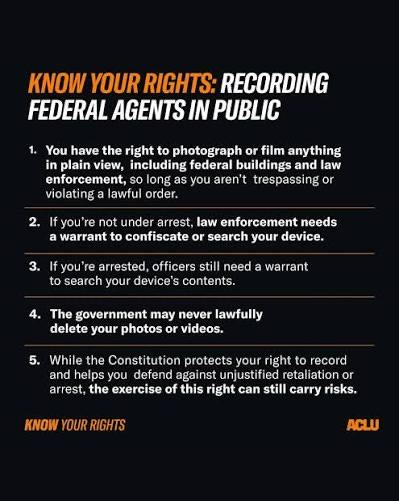
ACLU website with more resources on how to protect yourself as a journalist in high risk situations
click here for ACLU resource page website with more resources on how to protect yourself as a journalist in high risk situations
….
Do film is a really cool website that has a whole lot of resources totally for free for documentary Filmmaker and any other kind of Filmmaker.
https://dofilm.co.nz/updates/ethics-on-a-documentary-set/
Sharing this post with some friends and family!